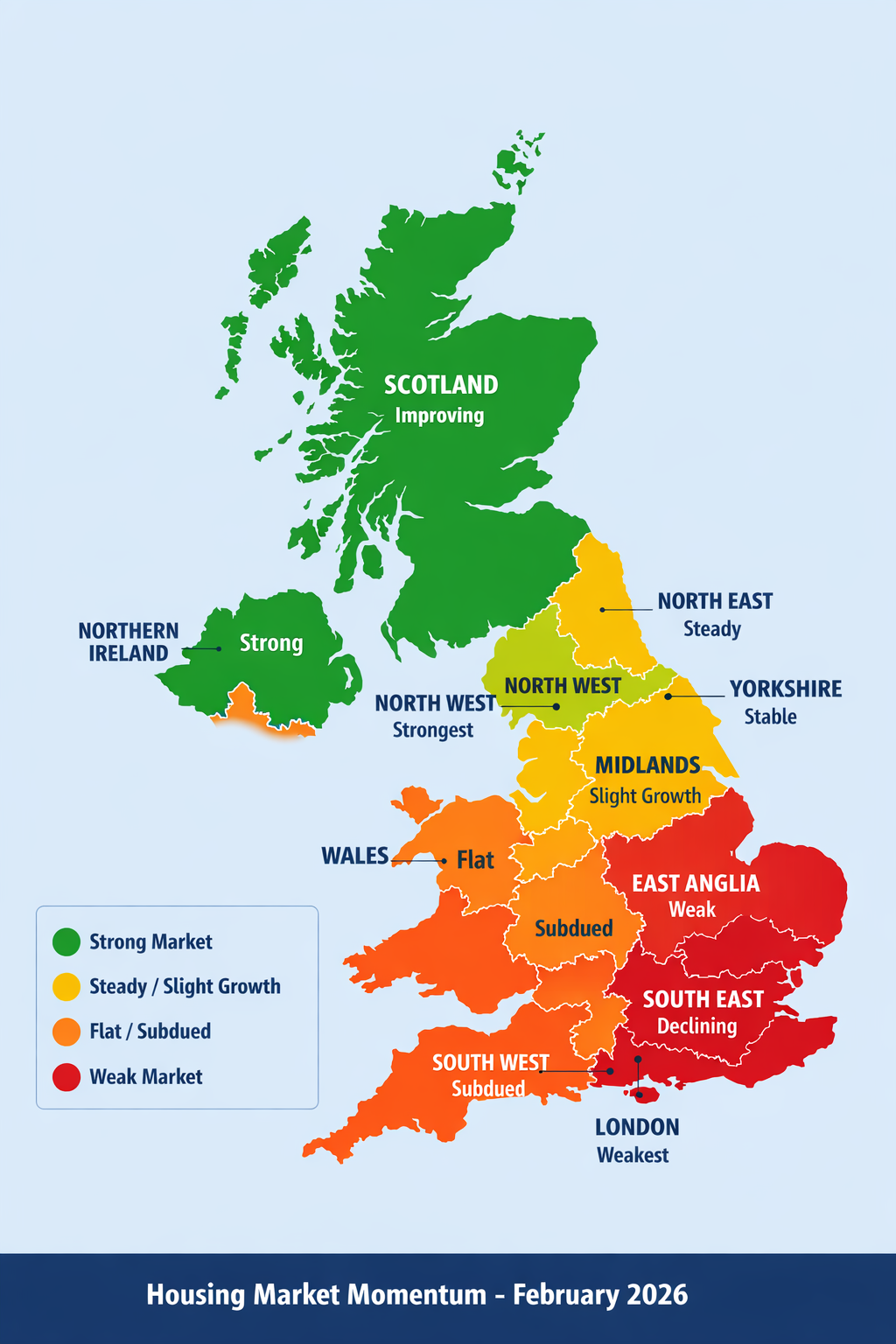
UK Housing Market Momentum (February 2026): Stronger growth in the North contrasts with weaker conditions in London and the South East.
UK Residential Housing Market Update
Residential Market Summary: Flat Overall, though outside London and the SE, Regional Growth Continues
The most recent RICS report (Feb. 2026) suggests the residential housing market and their prices are flat. But this report is based on national averages, which are skewed by the South East and London markets. Prices and sales in the North West and to a slightly lesser extent the West Midlands are still rising, even if at a lower rate than previously.
Anecdotal evidence suggests the North West and West Midlands are still busy and our own experience confirms this. However, if the war in the Middle East continues for an extended period, we do suggest there may be a slowdown due to higher living costs and mortgage rates. If the war ends soon, the forecast for the rest of the year is generally positive, especially for the North West and West Midlands.
We will keep you updated after the next Monthly survey due at the end of this month.
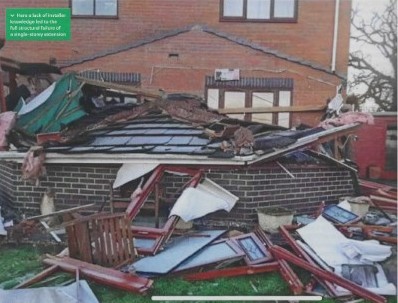
Collapsed conservatory alteration, installation of a new roof
Conservatory Alterations
Is there a need for improved information for builders and roofers on the need for Building Control approval systems when structural modifications are undertaken on residential buildings?
As a practising building surveyor writing a condition report, it is important to consider the findings of presale surveys on properties being considered for purchase. In some cases, the survey may indicate that certain alterations to the property have been made without the necessary building control applications. For instance, an extension may have been built within permitted development limits based on its size, but it is still required to comply with Building Regulations. In such cases, it is a legal requirement for the property owners to contact the Local Authority Building Control for certification to ensure compliance with the regulations.
Failure to obtain the necessary approvals for alterations poses a risk of serious and costly issues, as well as potential dangers. Some common alterations that require building control applications include the removal of chimney stacks or internal supporting walls, repairs to more than 20% of a roof, and the installation of a new solid roof to a conservatory. It is worth noting that replacing a glass or polycarbonate roof has become increasingly common, with many suppliers failing to inform owners of the requirement for building control approval.
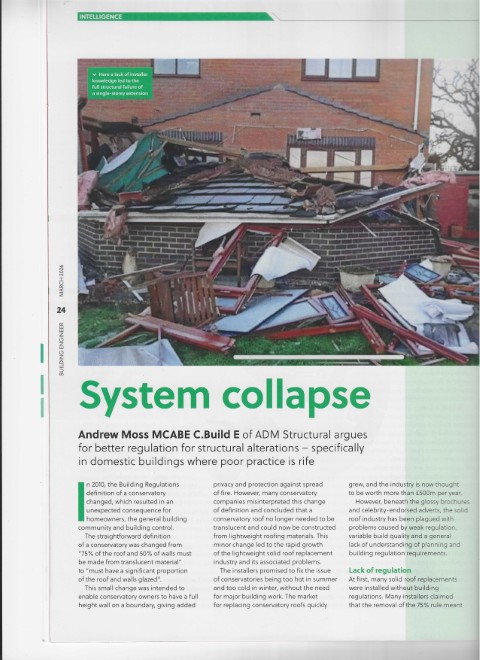
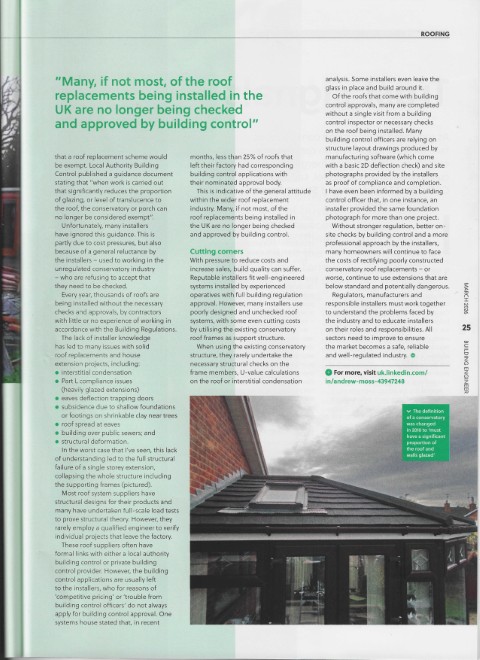
An article in the March 2006 edition of the Building Engineer Magazine highlights the risks associated with failing to comply with Building Regulations when replacing a roof. Without the required calculations to confirm compliance, there is a risk of the roof collapsing, potentially causing serious harm or damage. It is crucial to take any serious issues identified by a surveyor in their report seriously, as they are intended to protect against such risks. Ignoring these warnings could result in severe consequences, including injury or worse. See the recent article below or read it on-line at CABE
The risks of a system collapse of a conservatory following a major structural alteration with no Building Control approval.(page 1)The risks of a system collapse of a conservatory following a major structural alteration with no Building Control approval.
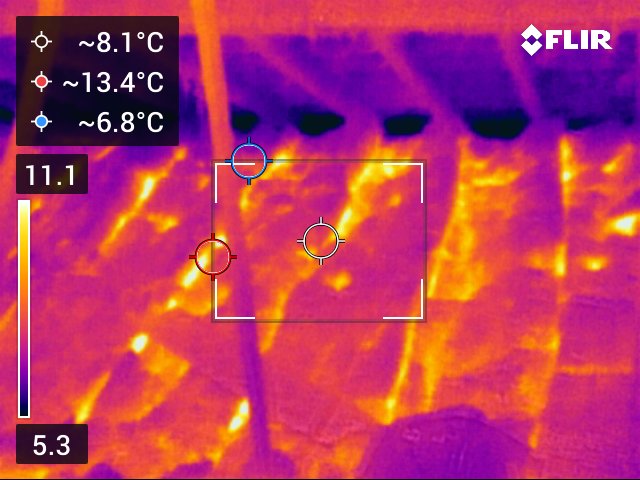
Thermal imaging, showing the roof's ineffective insulation.
Warm Homes Plan
How to find out if you are entitled to Warm Homes
The Department for Energy Security and Net Zero within UK government has published its policy paper aimed at cutting energy bills and upgrading ageing building stock across Great Britain – the Warm Homes Plan.
The paper opens with a ministerial statement from Ed Miliband, Secretary of State for Energy Security and Net Zero, who calls the Plan the next step in delivering the biggest public investment in home upgrades in British history: “The Warm Homes Plan will deliver £15 billion of public investment to upgrade up to 5 million homes and lift up to a million families out of fuel poverty by 2030.”
The Plan includes how grants and loans would work to assist residents in installing heat pumps or solar panels, the provision of support for those in fuel poverty, and new powers to ensure landlords make the investments needed in their properties to help reduce bills for their tenants. These specifics feed up into the UK government’s goals to “make the British people better off, secure our energy independence and tackle the climate crisis.”
In a recent press release responding to the Plan’s publication, the Construction Industry Council welcomed its release, with Matt Mahony, CIC Policy and Public Affairs Manager, commenting: “On the whole the announcement is very positive. It shows the government grasps the issues behind and understands what is driving the need for such measures. Yet despite the long wait for a plan, many questions remain about whether it is likely to deliver…Given the emphasis on promoting diverse systems of energy generation for households, government must also not lose sight of the importance of insulating homes for warmth.”